Podcast: Play in new window | Download | Embed
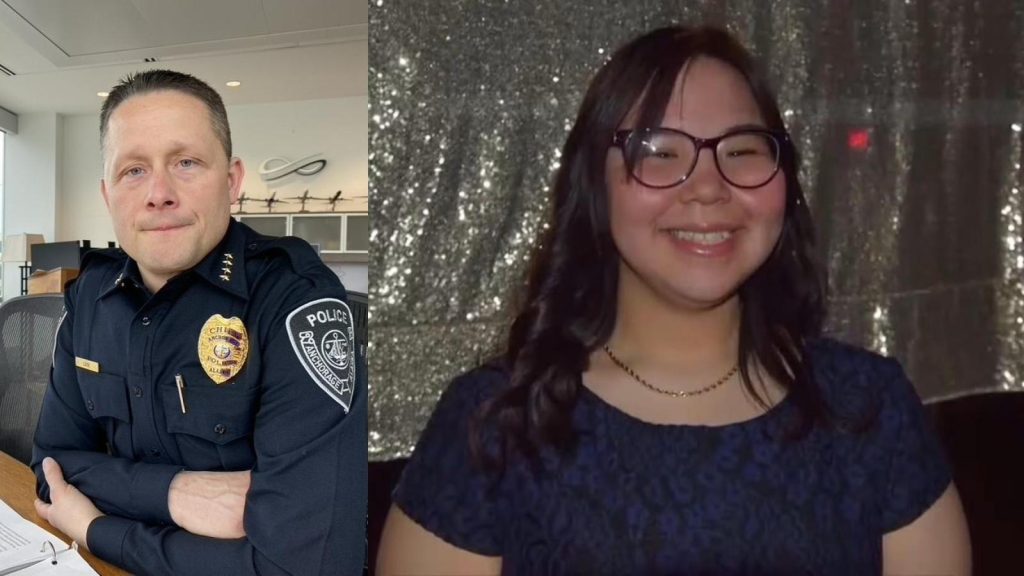
Photos: Anchorage police Chief Sean Case, left, and Kelly Hunt. (Rhonda McBride / Courtesy Melvin Hunt)
Anchorage Police say they are in the final stages of their investigation into the death of Kelly Hunt, the 19-year-old Shaktoolik student who disappeared in January on her way to college in Soldotna, as Rhonda McBride from our flagship station KNBA reports.
Hunt’s remains were found last month in a ravine in same Anchorage neighborhood where she had been staying with a friend.
Anchorage Police Chief Sean Case says the Medical Examiner’s preliminary report determined Hunt died from hypothermia and exposure, with alcohol in her system.
“There’s no indication that there’s physical trauma. There’s no indication that an assault has occurred. So, most of those questions — on whether-or-not there was a homicide — those questions have been answered through the Medical Examiner’s process.”
Case says Hunt was missing for more than 100 days, and due to prolonged exposure to the elements, he says it is nearly impossible to determine Hunt’s exact time of death.
Before closing out the investigation, Case says police will conduct follow-up interviews to learn more about the circumstances leading up to her death.
Based on the outcome of those interviews, Case says the investigation could shift back towards a criminal case. He calls Hunt’s death a tragedy, but says there is no evidence of a crime.
Hunt was supposed to catch a bus from Anchorage to attend the Alaska Christian College in Soldotna, Alaska. Her friends told police she left on the morning of January 7 to meet with someone to buy alcohol and had left her purse and suitcase behind.
Case says the investigation was further complicated, because her disappearance was not reported until four days later, but despite that, Case believes his police officers and detectives did a thorough job.
But advocates for Missing and Murdered Indigenous People, including Antonia Commack, question police handling of the case. She says investigators are drawing conclusions too soon, without first questioning the people who last saw Hunt.”
“How are you going to make that determination before you speak to those people. Because the bottom line is, she is not old enough to drink herself. Somebody furnished her alcohol and she wound up dead. That should be a crime.”
The Anchorage Police Department timed their report on the Kelly Hunt case with the launch of a new online dashboard that tracks missing persons iAnchorage and the department’s homicide clearance rate.
Case says the report confirms that Alaska Natives make up a disproportionate share of both missing persons and homicides, but says cases involving both Native and non-Native victims are solved at about the same rate.
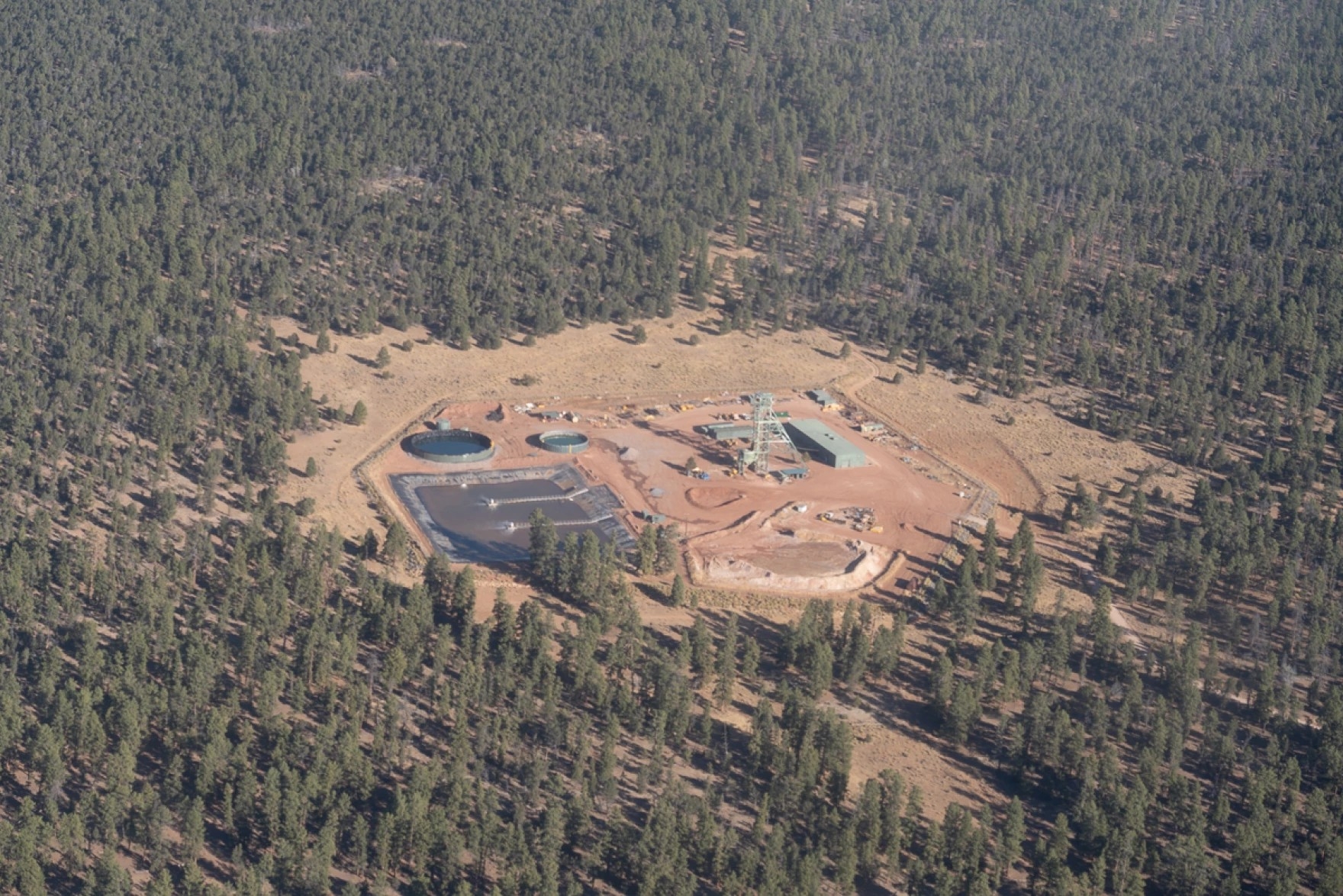
The Pinyon Plain Mine, as seen from the air in November 2019, is located on the Kaibab National Forest less than 10 miles from the South Rim of Grand Canyon National Park. (Photo: Ryan Heinsius / KNAU)
The company that owns a uranium mine near the Grand Canyon wants Arizona state regulators to approve a higher arsenic level in nearby groundwater.
KNAU’s Chris Clements reports at least two scientists oppose the idea.
Brad Esser used to work for Lawrence Livermore National Laboratory. He was asked by a nonprofit that opposes Energy Fuels’ Pinyon Plain Mine mine to look into the request.
“It sets the wrong incentive. You know, the response to high levels … is to try to understand what’s going on, not just simply raise the permit levels.”
But Energy Fuels says the higher arsenic levels are naturally occurring in groundwater near the mine, and are not because of mining activity.
Curtis Moore is a company executive.
“It’s not surprising that there are elevated levels of arsenic next to this ore body. That’s why we put a mine there, because there’s an ore body there.”
But Esser and another scientist argue it is more likely the mine is contributing to the high levels.
“They think the mine’s ventilation shafts could be creating oxygen-rich groundwater, causing arsenic minerals to dissolve.
If that’s true, Esser worries arsenic could one day reach the Havasuapi Tribe’s key source of drinking water.”
Get National Native News delivered to your inbox daily. Sign up for our daily newsletter today.
Download our NV1 Android or iOs App for breaking news alerts.
Check out today’s Native America Calling episode
Wednesday, May 20, 2026 – Native Playlist: Joy Harjo and Julia Keefe Indigenous Big Band