Podcast: Play in new window | Download | Embed
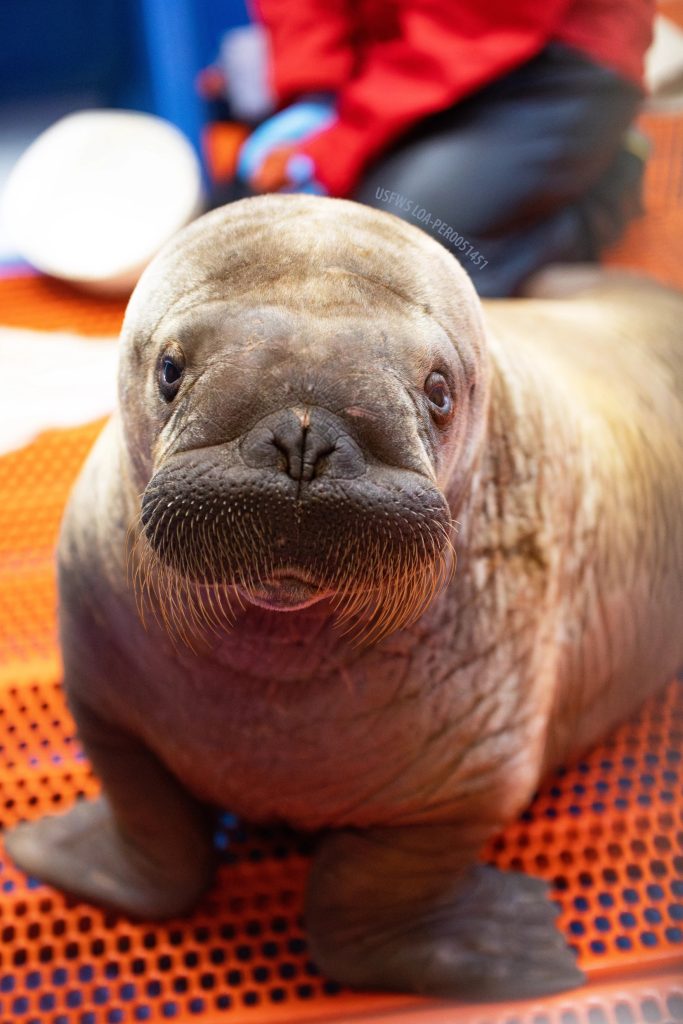
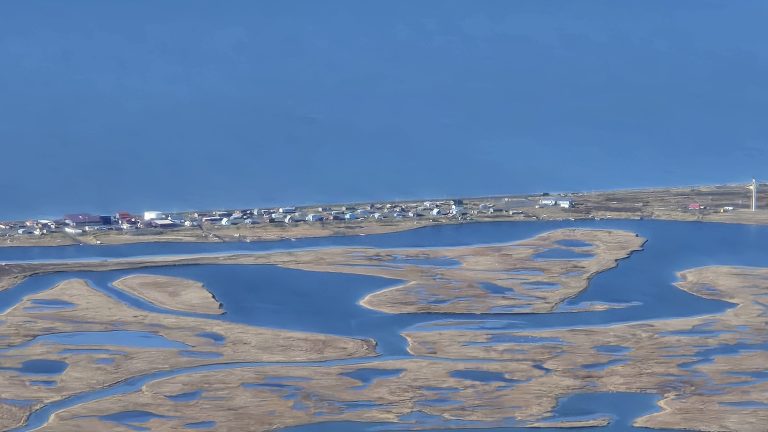
A college student near her hometown of Point Lay, Alaska made a startling discovery last month: A baby walrus sandwiched between two carcasses, as Alaska Public Media’s Casey Grove reports.
Violet Anniskett (Iñupiaq) was helping with a walrus survey on Alaska’s northwest coast.
“And I saw the stomach like move, and I was like wait. Take a step closer and his eyes opened-up.”
The calf had been under attack from seagulls. Polar bears roamed the area, and a storm was about to hit. Anniskett wanted to save the calf.
“He kind of missed his mother and walked around with a sad little, ‘Whooo.'”
After getting the OK from the community of Point Lay, Anniskett and U.S. Geological Survey’s walrus researcher, Tony Fischbach, took the calf to a small cabin.
The 200-pound calf, estimated to be about five months old, eventually warmed up to its human helpers, literally, by cuddling into Fischbach’s sleeping bag or laying its head on Anniskett’s leg.
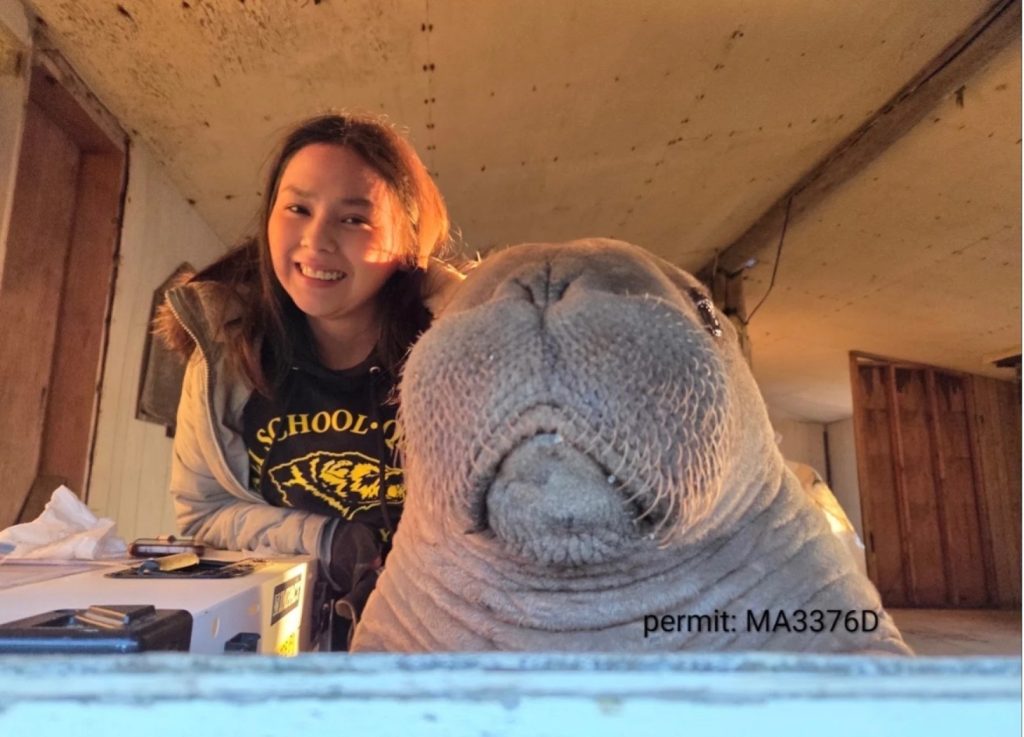
Violet Anniskett and Annautaq, an orphaned Pacific walrus calf she helped rescue near Point Lay, Alaska. (Photo: Anthony Fischbach / U.S. Geological Survey)
Anniskett named the walrus calf Annautaq after her late father.
A few days later, with the help of locals, they brought the calf to Point Lay in a boat. From there, they flew it to Anchorage and then drove it to Seward for rehabilitation at the Alaska SeaLife Center.
Fischbach says they later discovered the calf had been injured in what was probably an attack by a polar bear. Because of its young age and habituation to people, the SeaLife Center says it is not a candidate for being released back into the wild.
The SeaLife Center says Annautaq has since been transferred to his long-term home, though, but as of Monday, they have not said where that is.
-
- (Photo: C.J. Keene)
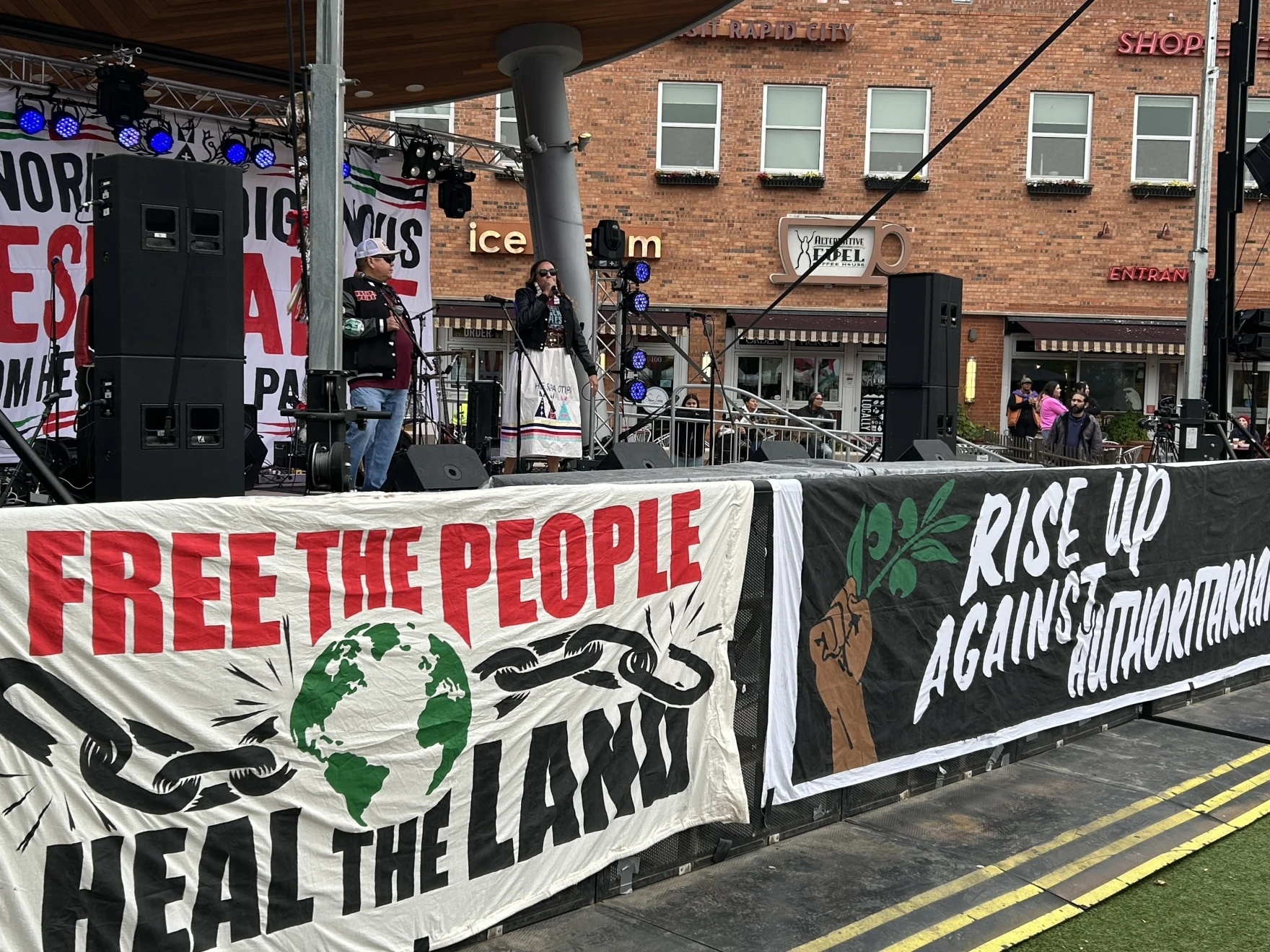
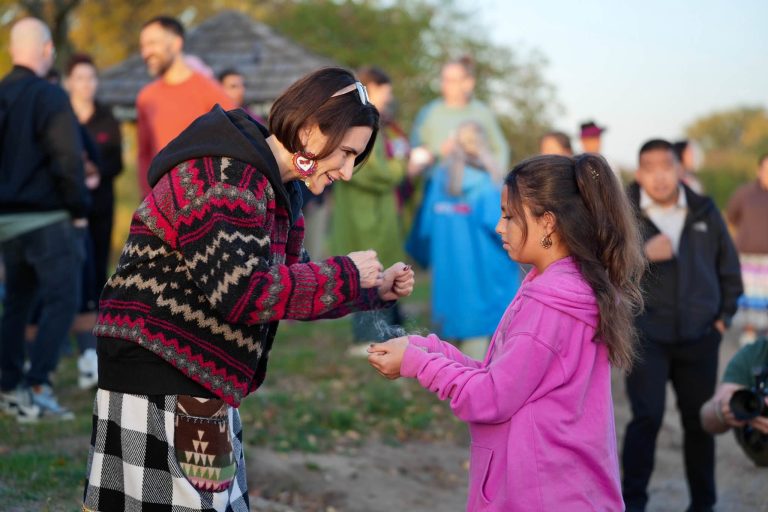
The Black Hills celebrated Indigenous Peoples Day this week. As music and the smell of hot food cut through the cold October air, organizers say the event was more than a rally. It was a chance to have fun. C.J. Keene has more.
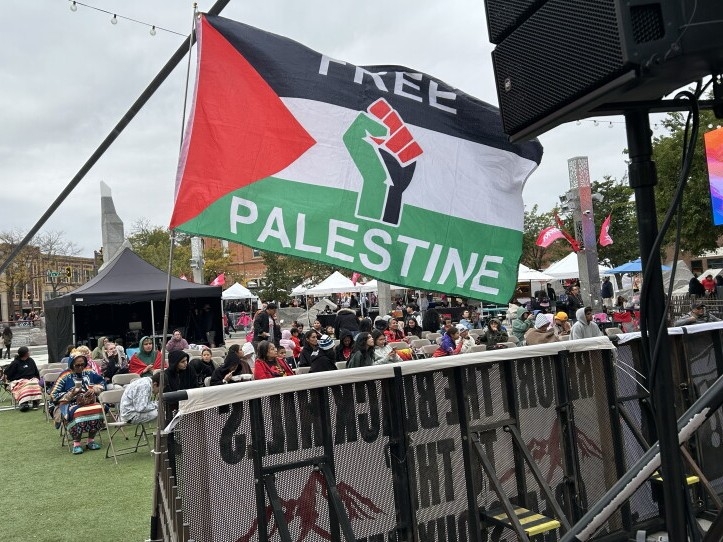
On stage in downtown Rapid City, South Dakota, a Palestinian keffiyeh adorned an eagle staff, symbolizing the interconnected struggles of Indigenous peoples the world over.
While a clear political symbol, NDN Collective strategic communications director Martell Hesketh says activists should celebrate these days with happiness.
“Organizing should also be joyful, right? Art and music and visual art has always been a core part of organizing. In this time, as we’re coming up to these really consequential elections, as we’re facing all these fights to protect our sacred sites, it’s more important now than ever to come together in these spaces. To celebrate, to lift our spirits, and also to share our messages.”
In the last year, those fights have seen victories in the field as mining equipment was removed from the Black Hills near Pe’Sla, a sacred site, and in the courtroom as the legal case against the Grand Gateway Hotel played out.
Poet and activist Robert Bordeaux (Siċaƞġu Lak̇ot̄a Oyat̄e) says sharing light despite ongoing struggles highlights the strength inherent in an indigenous background.
“This is a great example of the tenacity and resistance of Lakota people. The colonial project tried to erase us, and we’re still here. When we gather like this, it’s a showcase of that.”
And gather the community does. Hundreds braved a chilly autumn day, teepees lined downtown Rapid City’s Main Street, and for one night Indigenous peoples could celebrate the work they have done in the world of civil rights and consider a brighter future.
“I think a lot about resistance, and I think a lot about what it took for us to still be here. Carrying on our ways, our language, our culture. To me, it’s a celebration of that. I know protecting land and water is hard, difficult work, so when we can take a chance to gather around the drum, gather with music – I don’t know, it’s just really important.”
The night was capped with a performance by Macklemore, who once again performed a free concert for the community.
View this post on Instagram
Get National Native News delivered to your inbox daily. Sign up for our daily newsletter today.
Download our NV1 Android or iOs App for breaking news alerts.
Check out today’s Native America Calling episode
Wednesday, October 14, 2026 — Tribes remain excluded from some major water policy decisions

Leave a Reply