Podcast: Play in new window | Download | Embed
Sales of handmade Native American crafts and jewelry are estimated to generate $1 billion annually.
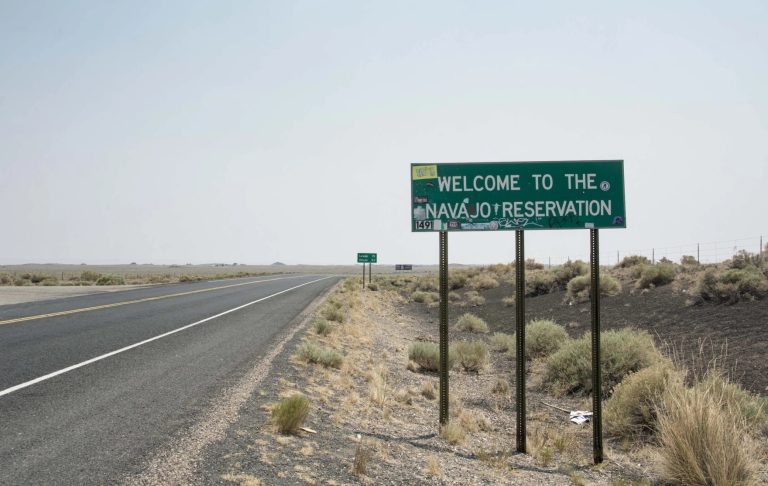
A Navajo-owned shop in Old Town Scottsdale has opened a second location in a Southwest city also known for its art scene.
KJZZ’s Gabriel Pietrorazio has more.
Santa Fe, New Mexico is widely considered the nation’s third-largest art market behind New York City and Los Angeles. Hence why owners of the original Native Art Market in Scottsdale decided to open another brick-and-mortar there in New Mexico.
Co-founder Heather Tracy says her Diné family-run business has been generations in the making.
“My great-grandma was the first generation to say no to the trading post because they were offering her pennies on the dollar for her artwork, and she went and set up on the roadside by the South Rim of the Grand Canyon. And even I was a roadside baby. I would sit on the roadside with her while she babysat me and play underneath the table, and so for us to come four generations later to owning a gallery that not only is for us but for the entire community, I know that she’d be super proud.”
More than $6 million has been sent to hundreds of Indigenous artisans since the Scottsdale co-op launched in 2020.
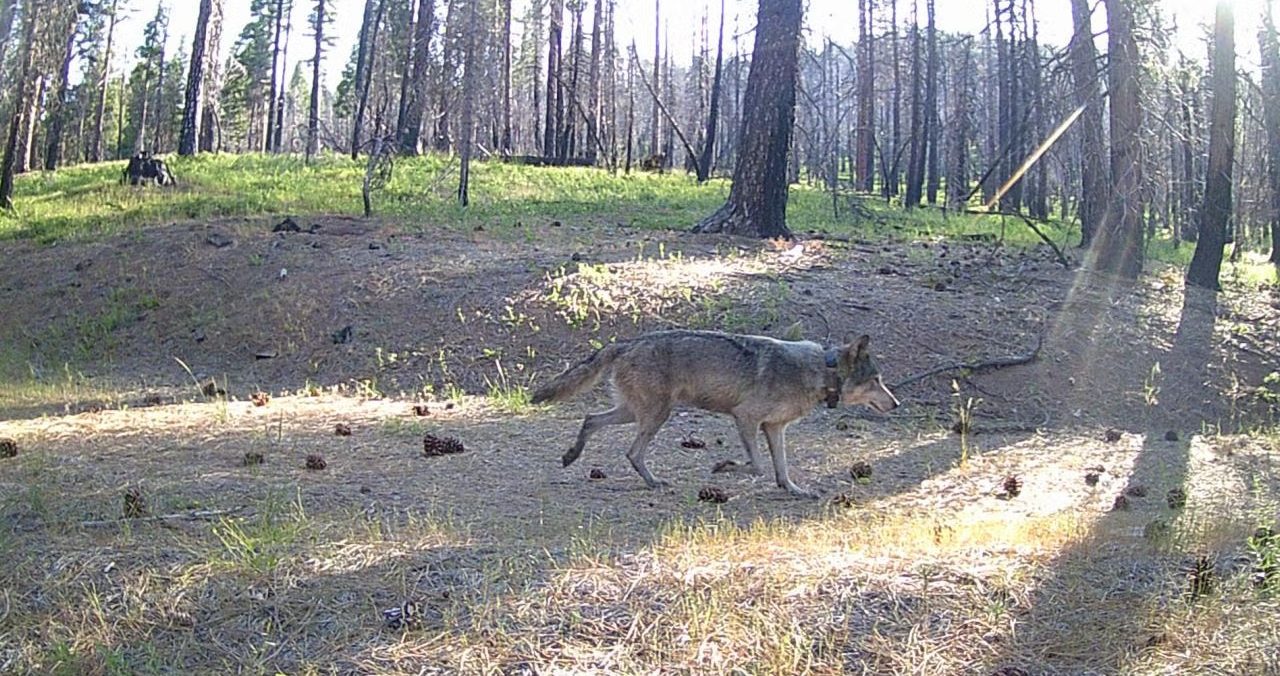
This gray wolf was caught on a game camera in Northeastern California. (Photo: Tina Saitone / UC Davis)
It has been a long journey for gray wolves in California. They are returning to landscapes across California after being driven out more than a century ago.
The animals have ecological and cultural significance for Indigenous communities across North America.
Roz Brown has more.
As National Wolf Awareness Week highlights conservation efforts, wildlife advocates are reflecting on the progress made toward restoring wolf populations and the challenges that remain.
Native to the Golden State, they were wiped out by the 1920s due to hunting and predator control.
There was no name given to the last gray wolf known to roam California in the 20th century, but the one who crossed over the Oregon border in 2011 was named nicknamed Journey – an apt description for the species’ successful reintroduction.
The awareness week was established in 1996 to educate the public about wolf ecology, their vital role as keystone predators, and the importance of peaceful coexistence.
“So I hope Wolf Awareness Week will give folks the chance to get more curious about what’s really going on. Where have we come? Where do we still need to go to really see wolves be recovered in the United States?”
California’s gray wolves live primarily in the state’s north and northeast regions, with activity areas and pack ranges extending into parts of the southern Sierra Nevada.
Alaska has the highest wolf population of any U.S. state, estimated between 7,000-11,000 wolves.
Schneider says wolves often are a lightning rod for disagreements about wildlife versus livestock, but most people fear losing them, and support maintaining their populations. She believes shared goals are needed between agencies, stakeholders, and wildlife advocates.
“Two steps forward, two steps back, I feel like is where we’ve been for a couple decades now, and it’s hard on the wolves, it’s hard on the people, and it’s hard on the agencies. And so we need to come together under some shared goals and objectives so we know what recovery does look like.”
Four hundred years ago, the North American gray wolf population was around two million, compared to current estimates of 65,000. They were the first animals to be placed on the U.S. Endangered Species Act list in 1973.
Defenders of Wildlife initiated the awareness week in 1996, one year after the historic wolf reintroduction in Wyoming’s Yellowstone National Park.
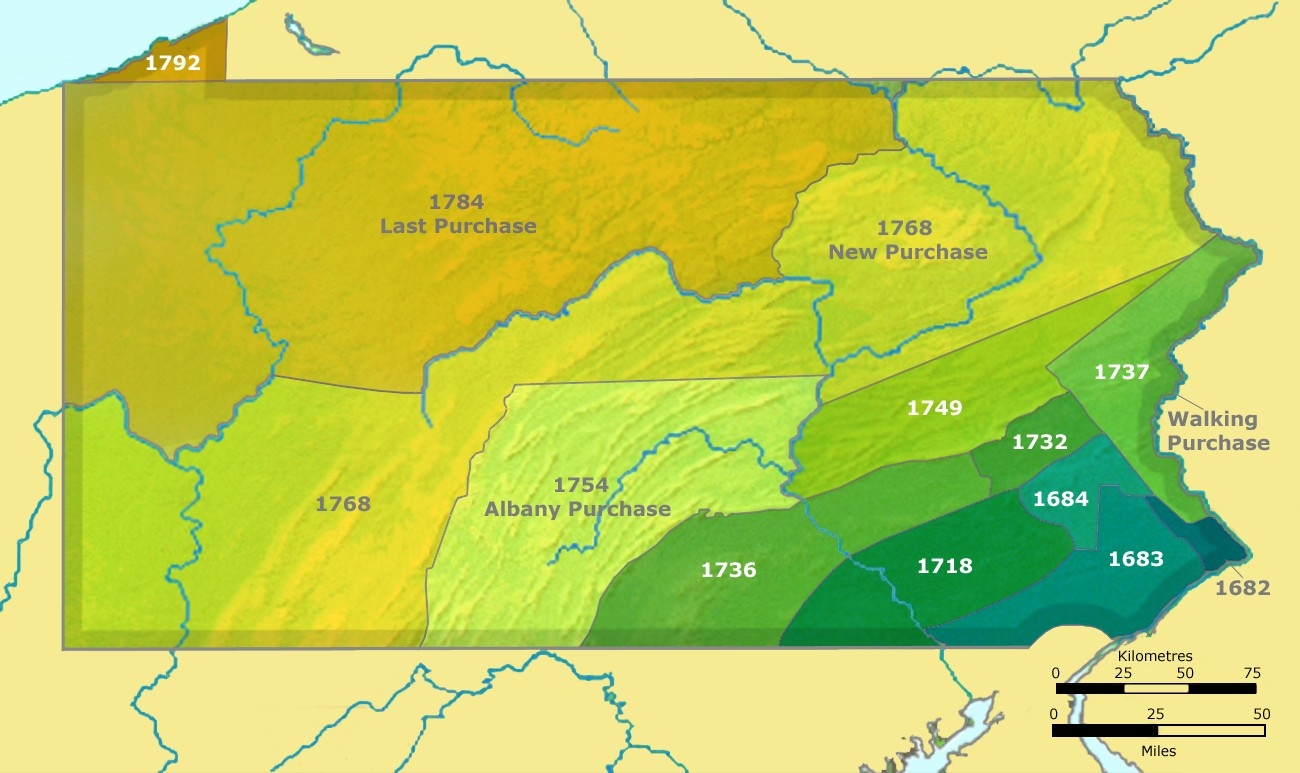 And on this day in 1758, the Treaty of Easton concluded in Pennsylvania between British colonial officials and representatives of Native nations, including the Haudenosaunee and Lenape.
The agreement sought to establish the Allegheny Mountains as a boundary between colonial settlements and Indian Country, amid growing conflicts over Native lands.
Get National Native News delivered to your inbox daily. Sign up for our daily newsletter today.
Download our NV1 Android or iOs App for breaking news alerts.
Check out today’s Native America Calling episode
https://www.nativeamericacalling.com/monday-october-26-2026-analysis-finds-doge-cut-nearly-470-million-from-tribe-budgets/