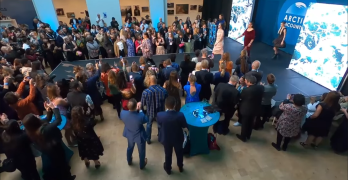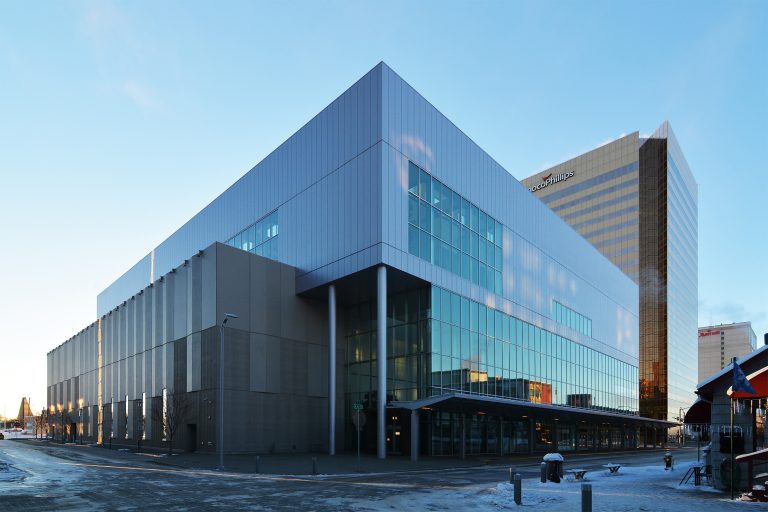
Photo: Dena’ina Civic and Convention Center in Anchorage, Alaska. (Paxson Woelber / Wikimedia)
More than 7,000 delegates are expected to attend the Alaska Federation of Natives Convention over the next three days.
AFN President Ben Mallott says Dr. Rosita Worl will speak to the theme of this year’s gathering, “Rooted in Our Land: Rising in Our Voices”.
“Her life has been amazing. Her knowledge and subsistence management policy education is a treasure for our state.”
Mallott says Worl’s keynote address caps off a year of outreach to educate Alaska Natives about the legal challenges facing subsistence.
“We are trying to become very proactive in subsistence, not reactive, so we aren’t fighting legal cases, trying to defend ourselves with petitions for rulemaking.”
Mallott says Worl’s knowledge and leadership have guided AFN through many subsistence battles over the years. He hopes her keynote will set the tone as AFN works to develop a new state, federal, and tribal framework for subsistence management — to give communities more direct control over the fish and wildlife they depend upon.
Subsistence is an issue which has long dominated AFN conventions, going back to its first gathering 60 years ago.
About 250 Native leaders from across Alaska came to form a statewide organization on October 18, 1966 to fight for their traditional lands, which the new state of Alaska wanted to claim as its own. They met above a fur store on Fourth Avenue in downtown Anchorage.
Many of those first attendees are gone. And those who remain, like Irene Rowan (Lingít), are now in their 80’s.
“I would say, Happy Birthday AFN. Thank you for keeping us together as a people.”
Today, AFN often feels like a giant reunion, bringing friends and family together, flying in from far corners of the state. But 60 years ago, delegates faced geographic barriers, came from unfamiliar cultures, and spoke different languages. Rowan says, after six decades of gathering every fall, it is easy to forget how challenging that first meeting was.
“They looked different. They dressed different. They were just all very different. How are you going to get them to get together to say we want to work together for our land.”
Rowan says there was considerable friction at that first meeting between different Native groups, unaccustomed to working together.
She says if she had been asked in 1966, whether AFN would still be around sixty years later, she would have had her doubts. But today, she says she cannot imagine life without AFN.
“I just love the spirit. I just love the relationship that one has with all the regions, not just their own. But how joyful, and how meaningful, and how comforting it is to be an Alaska Native.”
Rowan is from Klukwan near Haines, Alaska. In 1966, she was fresh out of college and took her first teaching job at the high school in Bethel, where she was known for her white go-go boots and pink raincoat.
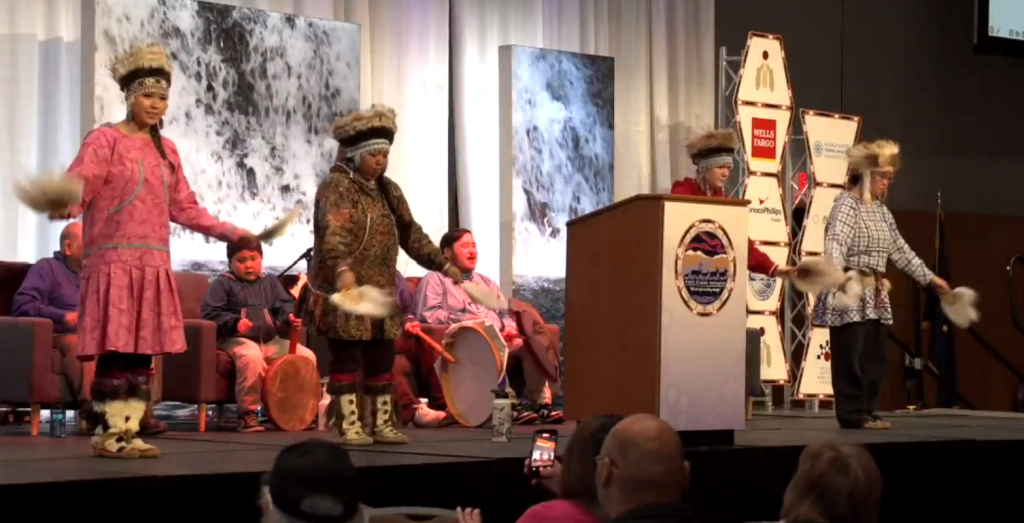
She says one of the things she enjoys most at AFN today is seeing the delegates dressed in their traditional regalia. She says that did not happen much in the early days of the conference, but over the years, AFN has helped to plant the seeds for today’s cultural renaissance.
Watch live convention coverage
Get National Native News delivered to your inbox daily. Sign up for our daily newsletter today.
Download our NV1 Android or iOs App for breaking news alerts.
Check out today’s Native America Calling episode